
Back pain has become one of the most common issues affecting office workers across Mumbai and India. With long hours spent at desks, improper posture, poorly designed workstations, and lack of movement, the spine undergoes tremendous stress every day. At My Pain Clinic Global, Bandra West, we witness hundreds of patients struggling with chronic back pain caused by desk jobs, computer-based work, and prolonged sitting. The good news is that most forms of desk-related back pain are preventable with correct spine care, timely physiotherapy, ergonomic corrections, and simple daily stretching routines.
This comprehensive 2000-word guide explains the deeper causes of office-related back pain, how it affects your spine, why it should never be ignored, and the top stretches that help protect your back. At My Pain Clinic Global, we specialise in spine rehabilitation, advanced physiotherapy, posture correction, and preventing long-term damage in office workers through a blend of clinical expertise and global technology.
Understanding Back Pain in Office Workers
Back pain is no longer an age-related problem. In Mumbai, Bandra, and other commercial hubs, people in their 20s, 30s, and 40s come to My Pain Clinic Global with spinal issues typically seen in much older age groups. The modern desk job environment places unnatural pressure on the spine, especially when posture is compromised.
Back pain develops gradually, and many office workers ignore early signs thinking it will settle on its own. However, repetitive stress without correction leads to persistent strain on the spinal discs, nerves, ligaments, and muscles. Over time, this results in long-term conditions such as disc bulges, herniation, nerve irritation, and chronic muscle tightness.
Major Causes of Back Pain in Office Workers
Here are the most common causes we see at My Pain Clinic Global, Bandra West, when treating patients dealing with chronic desk-job back pain:
1. Prolonged Sitting and Sedentary Work
Sitting for long hours compresses the spinal discs, reduces blood flow to the lower back, and weakens the stabilising muscles of the spine. This is one of the main reasons people in Mumbai’s corporate offices experience lower back pain.
2. Poor Ergonomic Setup
Many workstations are not spine-friendly. Incorrect chair height, poor lumbar support, low laptop screens, poorly positioned monitors, and faulty desk setups force the spine into unhealthy positions.
3. Forward Head Posture
Commonly seen when working on laptops or mobile phones. This posture increases strain on the neck, upper back, and mid spine, eventually causing pain, stiffness, and muscle imbalance.
4. Weak Core and Postural Muscles
The core supports the spine during sitting, standing, and movement. A weak core makes the spine unstable, causing the back muscles to overwork, leading to fatigue, pain, and long-term dysfunction.
5. Muscle Tightness
Sitting tightens the hip flexors, hamstrings, gluteal muscles, upper back muscles, and neck muscles, creating an imbalance around the spine. Tight muscles restrict movement and pull the spine into incorrect alignment.
6. Repetitive Strain
Small movements like stretching to reach for the mouse, leaning forward during typing, or slouching repeatedly cause micro-trauma to spinal tissues.
7. Stress and Mental Fatigue
Stress increases muscle tension along the neck and upper back. Office workers in Mumbai frequently report neck stiffness, tension headaches, and upper back pain triggered by long working hours and mental pressure.
8. Lack of Physical Exercise
Sedentary lifestyle is one of the leading contributors to back pain. Without regular movement, the spine loses flexibility, the muscles become weak, and joints become stiff.
9. Incorrect Sitting Posture
Slouching, sitting on the edge of the chair, crossing legs for long hours, leaning on one side, and sitting without lumbar support are everyday habits that damage the spine over time.
10. Work-from-Home Setup
Improvised home offices during remote working increased the incidence of back pain. Sofas, beds, and dining chairs do not provide the correct spinal support.
The Importance of Stretching for Office Workers
Stretching is one of the simplest yet most powerful tools for preventing and reducing back pain. It helps counter the negative effects of prolonged sitting by opening tight muscles, reducing stress on the spine, improving posture, and restoring flexibility in the hip and back area.
At My Pain Clinic Global, we teach customised stretching routines that are easy to perform even during office breaks. These stretches reduce spinal compression, improve blood circulation, relax tight muscles, and keep the spine healthy.
Top 5 Stretches for Office Workers to Prevent Back Pain
These stretches are chosen based on the most common muscle imbalances we see in patients at our Bandra West centre.
1. Seated Spinal Extension Stretch
This stretch reverses the effects of slumping and hunching over a desk. Sitting for long hours causes the spine to bend forward, leading to thoracic and lumbar strain. This stretch restores the natural spinal curves and relaxes overworked muscles.
Sit tall on your chair, place your hands behind your back, open your chest, and gently arch backwards. It helps reduce mid-back stiffness, improves posture, and opens the chest muscles which often tighten due to desk work.
2. Hip Flexor Stretch
One of the major causes of lower back pain in office workers is tight hip flexors. When these muscles shorten due to long sitting hours, they pull the pelvis forward, increasing pressure on the lower spine.
Kneel on one knee, push the hips forward, and feel the stretch deep in the front of the hip. This stretch releases pelvic tension and improves spinal alignment, making it essential for preventing back pain.
3. Hamstring Stretch
Tight hamstrings pull the pelvis and cause lower back strain. Most desk-job workers in Mumbai and India develop hamstring tightness due to constant sitting.
Place one foot on a low stool, keep the knee straight, and bend from the hips until you feel a stretch. This helps maintain pelvic balance and reduces muscle tension around the lower spine.
4. Upper Back (Thoracic) Stretch
Long hours of working on a laptop cause the upper back to round forward, weakening the thoracic muscles. This stretch focuses on opening the upper spine and reducing stiffness.
Sit upright, reach both hands forward, round the upper back, and stretch between the shoulder blades. It reduces upper back pain, improves breathing capacity, and supports healthy posture.
5. Neck and Shoulder Stretch
Forward head posture puts continuous pressure on the neck, shoulder muscles, and cervical spine. This stretch helps reduce tension headaches, neck stiffness, and shoulder tightness.
Gently tilt your head to one side while keeping the opposite shoulder down. Repeat on both sides. This releases trapped tension in the upper spine and improves blood flow to the neck muscles.
Why Back Pain Should Not Be Ignored
Back pain is a warning sign that the spine is under stress. Ignoring it leads to:
- Chronic muscular tightness
- Reduced mobility
- Nerve compression
- Disc bulges
- Sciatica
- Postural deformities
- Long-term spinal degeneration
At My Pain Clinic Global, Bandra West, we see patients whose pain could have been prevented with early physiotherapy and proper spine care. Early treatment always yields faster and safer results.
How My Pain Clinic Global Helps Office Workers with Back Pain
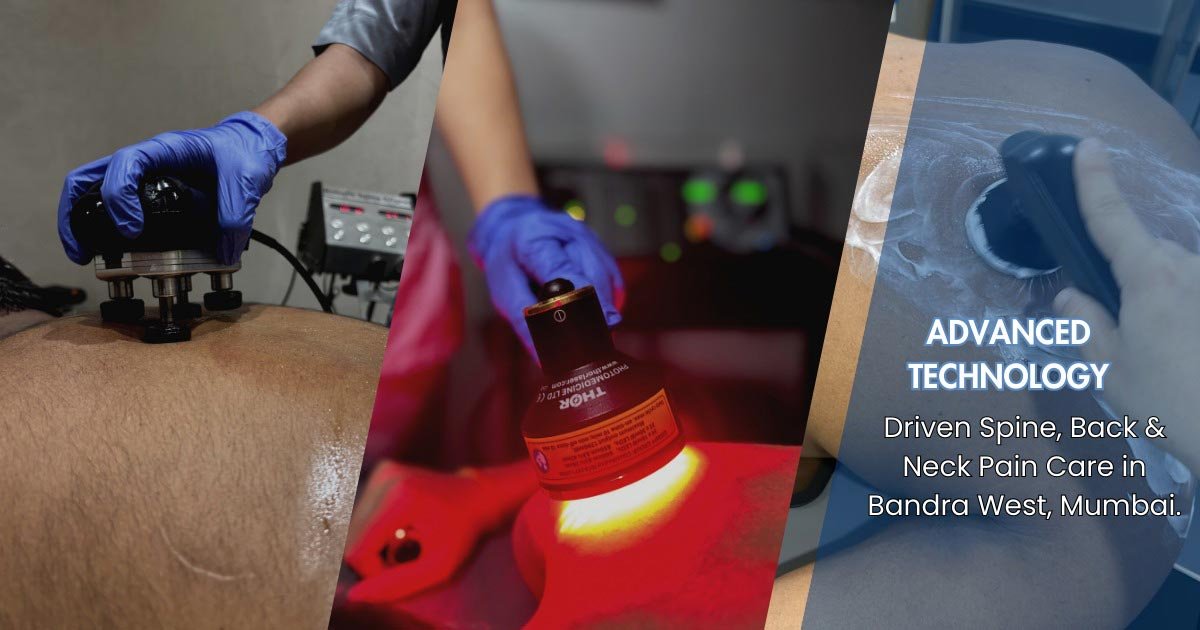
Our centre in Bandra West, Mumbai India, is equipped with advanced physiotherapy and spine rehabilitation systems imported from the USA, UK, and Europe. We combine manual therapy, targeted exercises, posture correction, ergonomic counselling, and global technology to create a comprehensive spine program.
Our treatment includes:
- Posture analysis
- Core strengthening
- Spinal mobility training
- Deep tissue release
- Magneto therapy
- PBM laser therapy
- Acoustic wave therapy
- Red light therapy
- Ergonomic corrections
- Workstation design guidance
We focus on long-term relief, not temporary fixes.
Conclusion
Back pain has become a widespread issue among office workers in Mumbai, India. A stressful work culture, long sitting hours, improper posture, and lack of movement place constant pressure on the spine. At My Pain Clinic Global, Bandra West, we provide advanced physiotherapy, spine rehabilitation, and ergonomic guidance to help office workers live pain-free and prevent long-term spinal damage.
Incorporating daily stretches, making simple ergonomic changes, and seeking professional spine care when needed can protect your back and improve your overall well-being. If you are facing any form of back pain, stiffness, spine issues, or posture problems, visiting My Pain Clinic Global can help you get accurate diagnosis, targeted treatment, and long-lasting recovery.