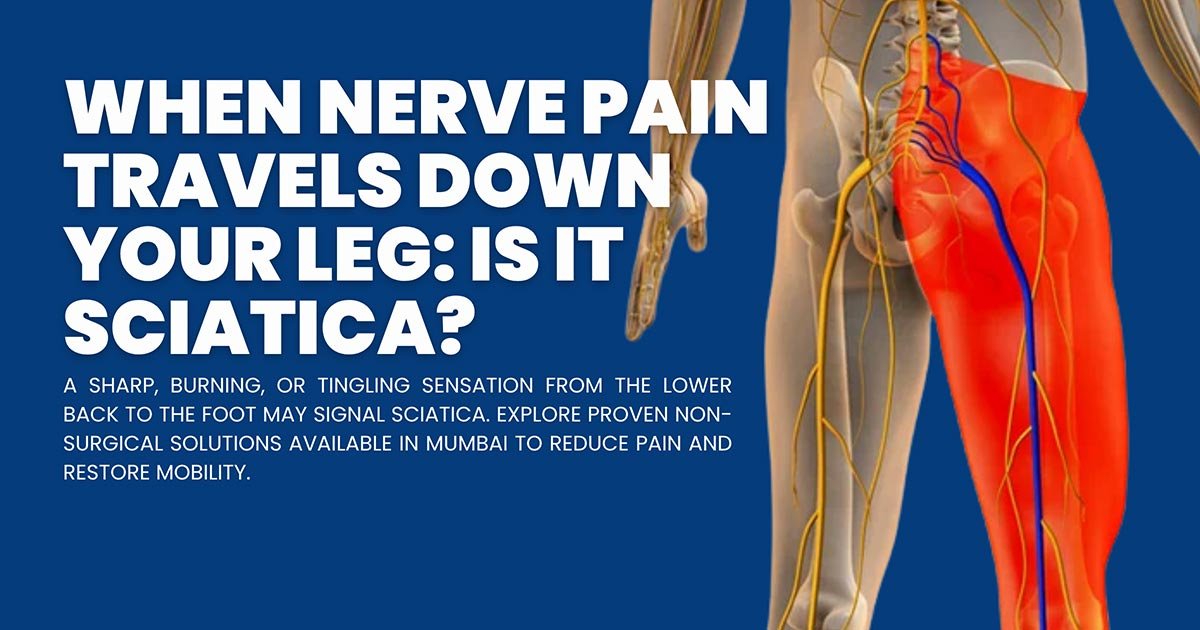
Sciatica is one of the most common causes of lower back and leg pain affecting adults today. The condition occurs when the sciatic nerve, which is the largest nerve in the human body, becomes irritated, inflamed, or compressed.
As a result, individuals may experience pain that radiates from the lower back through the buttocks and down the leg, significantly affecting mobility, daily activities, and overall quality of life.
Many individuals assume that surgery is the only effective solution for severe sciatica symptoms. However, this is not always the case, as a large percentage of patients respond well to conservative and non-surgical treatment approaches. When diagnosed early and managed appropriately, sciatica can often be treated successfully without the need for invasive procedures.
What Is Sciatica?
The sciatic nerve originates from a group of nerve roots in the lower spine and travels through the hips, buttocks, and down each leg. Because it is responsible for both movement and sensation in the lower limbs, any irritation or compression can lead to a variety of uncomfortable symptoms. These symptoms are collectively referred to as sciatica.
It is important to understand that sciatica is not a medical diagnosis in itself. Rather, it is a symptom that indicates an underlying condition affecting the sciatic nerve. Identifying and treating the root cause is essential for achieving long-term relief and preventing recurrence.
Common Causes of Sciatica
Herniated Disc
A herniated or bulging disc is one of the most common causes of sciatic nerve compression. When the soft inner material of a spinal disc pushes outward, it can place pressure on nearby nerve roots. This pressure often leads to pain, numbness, tingling, and weakness that radiate along the path of the sciatic nerve.
Degenerative Disc Disease
As people age, the spinal discs naturally lose water content and flexibility. This age-related wear and tear can reduce the cushioning between vertebrae and increase stress on surrounding structures. Over time, these changes may contribute to nerve irritation and the development of sciatic symptoms.
Spinal Stenosis
Spinal stenosis refers to the narrowing of the spinal canal, which can place pressure on the spinal cord and nerve roots. This condition is more common in older adults and often develops gradually over time. When the narrowing affects the nerves that form the sciatic nerve, symptoms such as leg pain, weakness, and numbness may occur.
Piriformis Syndrome
The piriformis muscle is located deep within the buttock region and lies close to the sciatic nerve. If this muscle becomes tight, inflamed, or spasms excessively, it can compress the sciatic nerve and trigger symptoms similar to traditional sciatica. Proper assessment is important because treatment approaches may differ depending on the underlying cause.
Poor Posture and Sedentary Lifestyle
Modern lifestyles often involve prolonged periods of sitting, whether at work, during commuting, or while using electronic devices. Poor posture combined with a lack of physical activity can increase stress on the lower back and surrounding muscles. Over time, these factors may contribute to spinal dysfunction and irritation of the sciatic nerve.
Symptoms of Sciatica
Sciatica symptoms can vary from person to person depending on the severity and location of nerve compression. Some individuals experience mild discomfort, while others may struggle with intense pain that interferes with daily activities. The symptoms often affect only one side of the body and may worsen with certain movements or prolonged sitting.
Common symptoms include:
- Sharp, shooting pain that travels down one leg
- Burning sensation in the buttock or leg
- Numbness or tingling in the lower limb
- Weakness in the affected leg or foot
- Pain that worsens while sitting for extended periods
- Difficulty walking, standing, or performing routine activities
In some cases, symptoms may come and go, while in others they may persist continuously. Seeking professional evaluation can help determine the severity of the condition and guide appropriate treatment.
When Should You Seek Medical Help?
While mild sciatic symptoms may improve with rest and self-care, persistent or worsening symptoms should not be ignored. Early intervention often leads to better outcomes and reduces the risk of chronic pain or long-term complications. Delaying treatment may allow the underlying condition to progress and become more difficult to manage.
Medical evaluation is recommended if symptoms persist beyond two weeks, become progressively worse, or are accompanied by significant weakness.
Immediate medical attention should also be sought if there is loss of bladder or bowel control, severe numbness, or sudden difficulty walking, as these may indicate a more serious condition.
Non-Surgical Treatment Options
Comprehensive Physiotherapy
Physiotherapy is one of the most effective non-surgical treatments for sciatica. A structured rehabilitation program focuses on improving spinal mobility, reducing nerve compression, and strengthening the muscles that support the spine. Treatment plans are customized to each patient’s condition, ensuring a targeted and effective recovery process.
Manual Therapy
Manual therapy involves hands-on techniques performed by trained physiotherapists to improve joint mobility and reduce muscle tension. These techniques can help decrease stiffness, improve circulation, and restore normal movement patterns. When combined with exercise therapy, manual therapy often enhances overall treatment outcomes.
Shockwave Therapy
Shockwave therapy is an advanced treatment option that may help reduce muscular tension and improve tissue healing. By delivering controlled acoustic waves to affected areas, this therapy can stimulate circulation and promote recovery. It is often used as part of a comprehensive treatment plan for patients experiencing persistent pain and muscle tightness.
Photobiomodulation Laser Therapy
Photobiomodulation (PBM) Laser Therapy, also known as Low-Level Laser Therapy (LLLT), is a non-invasive treatment that uses specific wavelengths of light to stimulate cellular repair and reduce inflammation. For patients with sciatica, PBM Laser Therapy may help decrease nerve-related pain, improve circulation, and accelerate tissue healing at the cellular level.
This advanced therapy works by enhancing mitochondrial function within cells, increasing energy production and supporting the body’s natural healing processes. Many patients experience reduced pain, improved mobility, and faster recovery when photobiomodulation is integrated into a comprehensive rehabilitation program. Because it is painless and drug-free, PBM Laser Therapy is becoming an increasingly popular option for managing musculoskeletal and nerve-related conditions.
Hyperbaric Oxygen Therapy (HBOT)
Hyperbaric Oxygen Therapy involves breathing pure oxygen in a pressurized environment. This process increases oxygen delivery to tissues and may support healing and recovery in selected patients. Although not suitable for every case of sciatica, HBOT can be considered as part of a multidisciplinary treatment approach when clinically appropriate.
Postural Correction
Poor posture is a significant contributing factor in many cases of lower back pain and sciatica. Correcting workplace ergonomics, improving sitting habits, and learning proper movement techniques can reduce stress on the spine. These changes play a crucial role in both symptom relief and long-term prevention of recurrence.
Recovery Timeline
Recovery from sciatica varies depending on the severity of the condition, the underlying cause, and the individual’s overall health. Many patients begin noticing improvements within four to six weeks of starting a structured treatment program. Consistency with therapy, exercise, and lifestyle modifications is often a key factor in achieving successful outcomes.
Some individuals may recover more quickly, while others with chronic or complex conditions may require a longer rehabilitation period. Regular follow-up and professional guidance help ensure that progress remains on track and that treatment plans are adjusted as needed.
Preventing Sciatica Recurrence
Preventing future episodes of sciatica requires a proactive approach to spinal health and overall fitness. Making small but consistent lifestyle changes can significantly reduce the risk of recurring symptoms. Long-term prevention is often easier and more effective than treating repeated episodes of pain.
Important preventive measures include:
- Maintaining a healthy body weight to reduce spinal stress
- Exercising regularly to improve strength and flexibility
- Strengthening core muscles to support the spine
- Avoiding prolonged periods of sitting whenever possible
- Practicing proper lifting and bending techniques
- Prioritizing good posture during daily activities
By incorporating these habits into everyday life, individuals can improve spinal health and reduce the likelihood of future sciatic nerve irritation.
Why Choose Professional Treatment?
Ignoring sciatica symptoms can lead to chronic pain, reduced mobility, and recurring episodes that become increasingly difficult to manage. Professional assessment helps identify the underlying cause and ensures that treatment is tailored to the individual’s specific needs. Rather than simply masking symptoms, a comprehensive rehabilitation program focuses on addressing the root problem.
At My Pain Clinic Global, our multidisciplinary approach combines physiotherapy, manual therapy, Clinical Pilates, Photobiomodulation Laser Therapy, Hyperbaric Oxygen Therapy (HBOT), movement correction, and advanced recovery technologies to deliver personalized care. Our goal is to help patients reduce pain, restore function, and return to an active, healthy lifestyle. Through evidence-based treatment strategies, we aim to provide lasting relief and improved quality of life.
Conclusion
Sciatica can be a painful and disruptive condition that affects both physical function and overall well-being. Fortunately, surgery is not the only treatment option, and many patients achieve excellent results through non-surgical approaches. Early diagnosis, professional guidance, and a structured rehabilitation plan can significantly improve recovery outcomes.
Modern therapies such as Photobiomodulation Laser Therapy, alongside physiotherapy, Clinical Pilates, and other evidence-based treatments, offer additional options for reducing pain and supporting recovery. By addressing inflammation, promoting tissue healing, and improving movement patterns, these therapies can play an important role in comprehensive sciatica management.
If you are experiencing radiating leg pain, numbness, tingling, or persistent lower back discomfort, seeking professional assessment is an important first step. Timely intervention can help you recover faster, prevent long-term complications, and regain confidence in your daily activities. With the right treatment and preventive strategies, it is possible to manage sciatica effectively and enjoy a more active, pain-free life.